
The back button closes what is open
The phone's back button closes the top open layer — a sheet, a drawer, a viewer,
the shell — one press at a time. With nothing open it leaves the app as it always
did. On a keyboard, Escape closes the same stack.
Why you would use it
On Android, back is the gesture you already use to dismiss things. Without this, back from an open review sheet would quit an installed app and lose your place.
How to use it
Press back. Press it again for the next layer down. Or press Escape, wherever
the cursor is.
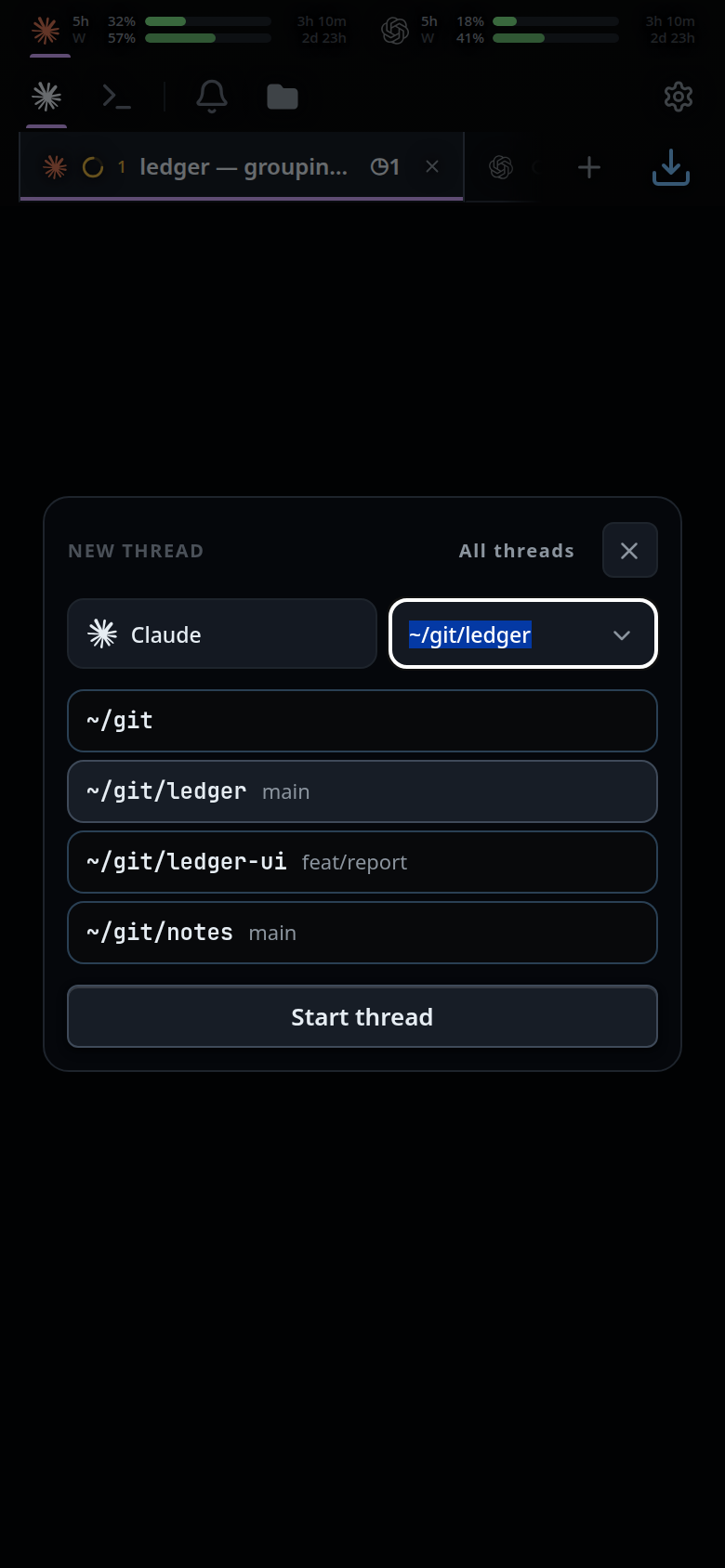
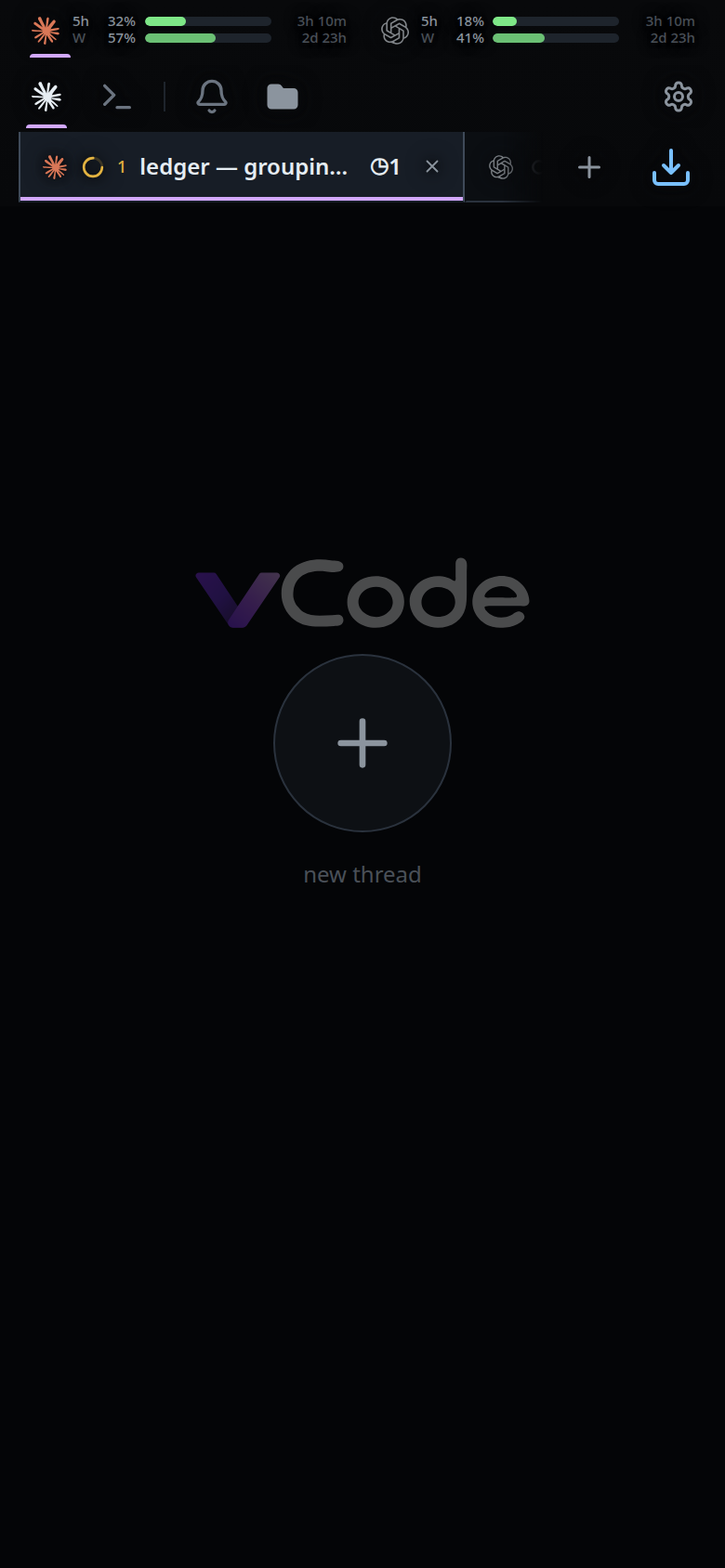
One press closes the card. The page under it is still there.
What you see
Each press closes the topmost of these, in this order:
- an open screenshot (
#shotview) — see inline-screenshots - the file viewer (
#viewer) — see file-viewer - the review sheet (
#review) — see diff-review-sheet - the changed-files popup (
#changes) — see turn-changes - the new-thread card (
#newthread) - the settings sheet (
#settings) - the Threads sheet (
#sessions) - the tab drawer (
#drawer) - the file explorer (
#explorer) — see file-explorer - the slash menu — see slash-menu
- the keys tray — see shell-keys
- shell mode, back to the agent — see shell-mode
- the new-thread page, back to the tab it was reached from
With all of those closed, back leaves the app.
Escape closes the same list, one press at a time, down to the keys tray — the
last two are modes rather than layers over the screen, so Escape leaves shell
mode and the new-thread page alone. With all of them closed and a turn running,
Escape stops the turn — see
stop-a-running-turn. With nothing
open and nothing running the key is the browser's again, so a full-screen window
still leaves full screen.
A field or a menu the key was typed into takes it first: a tab being renamed, the
slash menu, the folder menu in the new-thread card, and the explorer's filter
while it has something in it. Press Escape again for the layer under it.
Limits and known gaps
- Android and any installed PWA. On a desktop browser it is the browser's back button, which behaves the same way.
- A pinned slash menu stays up under a sheet, so it closes after the sheets rather than being shut out of sight.
- A history entry left behind by a reload is dropped, so back still leaves the app rather than appearing to do nothing.
- A docked panel — the file explorer as a column on a wide window — is not a
layer, and neither back nor
Escapecloses it. See wide-layout. Escapedoes not leave shell mode or the new-thread page; back does.- Back never stops a turn. Only
Escapedoes, and only with nothing open over the screen and shell mode off.
Related
- navigation-and-commands — every gesture and key, phone and desktop
- tab-drawer — one of the layers
- threads-sheet — another
- swipe-between-tabs — the new-thread page, the last layer back leaves
- file-explorer — the layer on the right edge
- shell-mode — the second-to-last layer
- slash-menu — a layer that closes after the sheets
- stop-a-running-turn — what
Escapereaches once the stack is empty